Projects
Research publications, applied ML systems, and earlier work spanning multimodal AI, NLP, anomaly detection, and computational neuroscience.


Paper
2026
When a model answers a chart question incorrectly, which underlying skill failed? ChartProbe decomposes each question into probes that target perception, grounding, and simple reasoning separately, with exact ground truth derived from the code that generates the chart. Fine-tuning on these simple skills alone transfers to held-out complex reasoning across three open-weight VLMs.

Paper
2026
PROVE recovers the prompt behind an image by composing scene descriptions the image can verify, rather than optimizing token sequences. Every recovered claim is grounded in explicit visual evidence, making the result auditable. Across MS-COCO, Flickr30K, and Lexica, it outperforms optimization, captioning, and reinforcement learning baselines without any training or access to the generator.
CVPR-VisCon
2026
CVPR 2026, Third Workshop on Visual Concepts (VisCon)
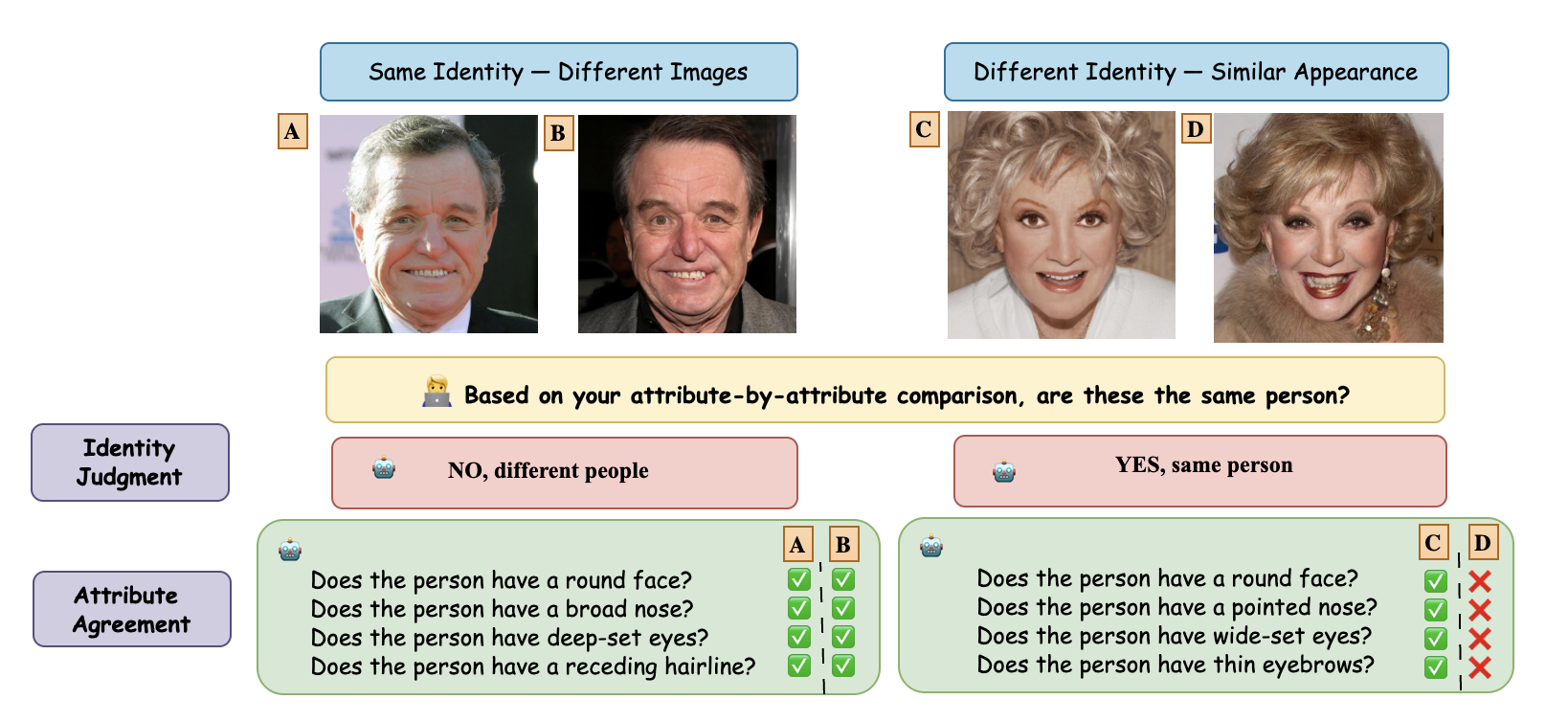
We probe whether vision-language models can reason about facial identity or merely pattern-match on low-level features. Using FaceBench, we build a diagnostic framework that localizes the perception-to-reasoning gap, distinguishing failures of visual perception from failures of reasoning over perceived attributes.
SemEval
2026
SemEval 2026
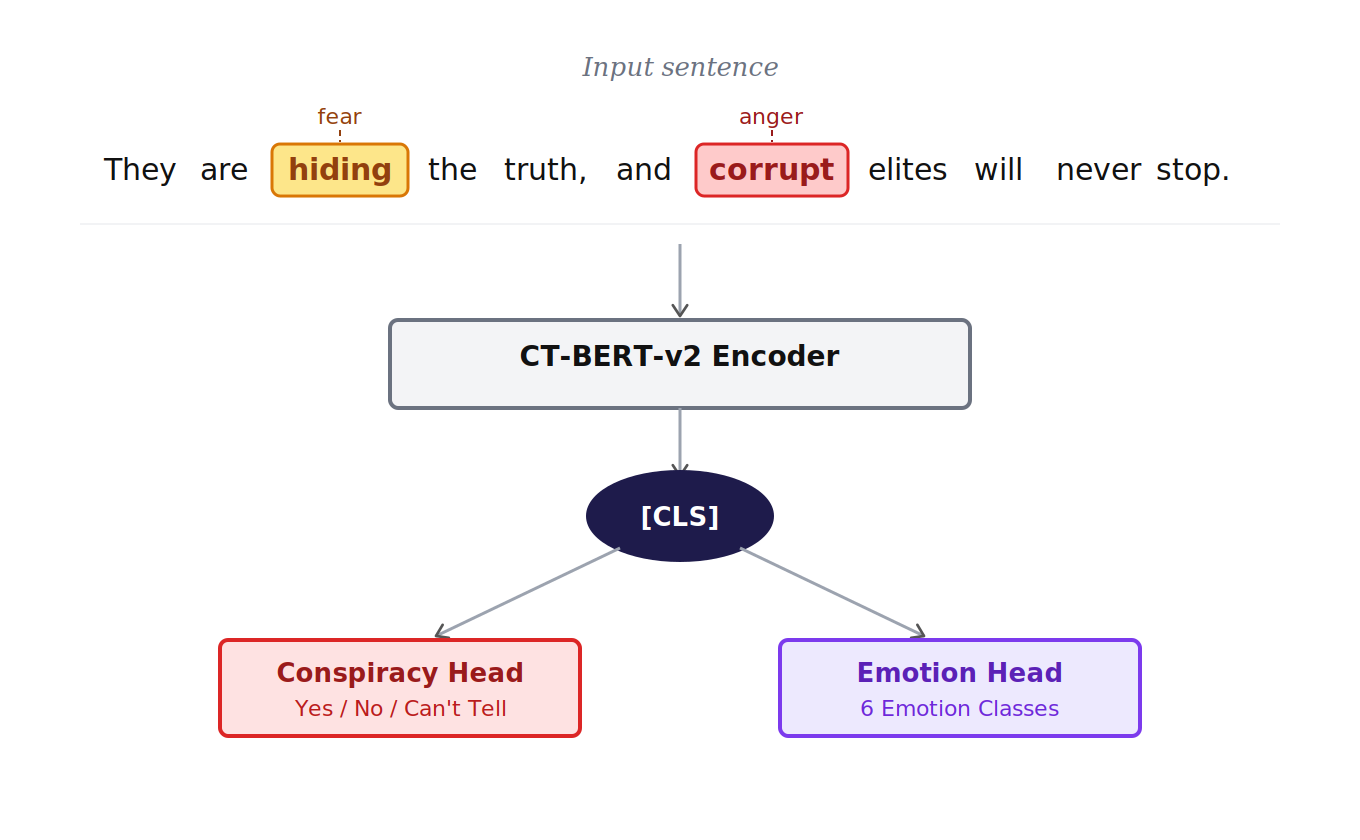
We present a multi-task learning system that jointly models emotion signals and conspiracy detection, motivated by the strong correlation between affective language and conspiratorial framing. The system achieves competitive performance on Task 10 of SemEval-2026.
KDD
2025
Hierarchical Prompting Taxonomy: A Universal Evaluation Framework for Large Language Models
KDD 2025
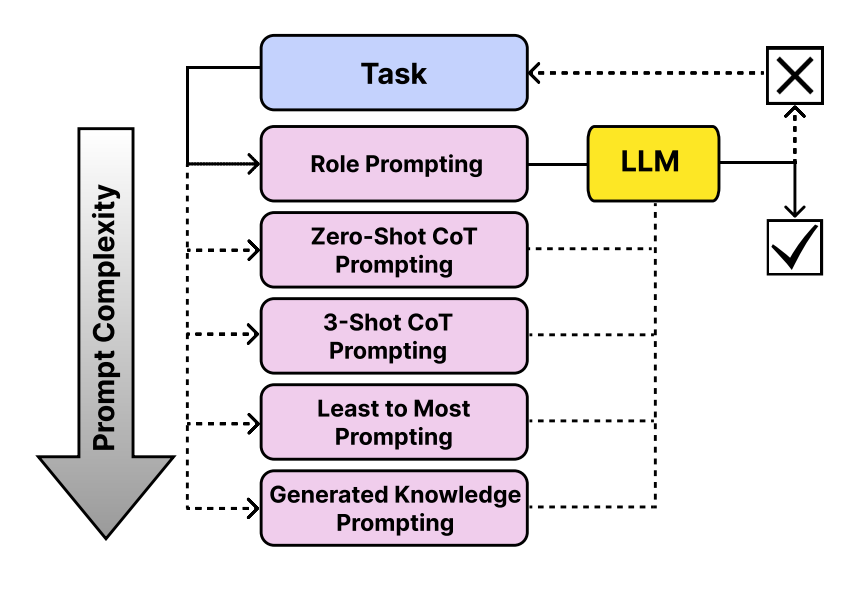
We introduce HPT, a cognitively motivated framework that categorizes prompting strategies by their cognitive demands and defines the Hierarchical Prompting Index (HPI) to quantify task complexity. The framework enables systematic analysis of reasoning capabilities across LLMs, yielding interpretable insights into problem-solving behavior.

NeurIPS
Spotlight
2024
Who Evaluates the Evaluations? Objectively Scoring Text-to-Image Prompt Coherence Metrics with T2IScoreScore (TS2)
NeurIPS 2024, Spotlight (top 5% of submissions)
Automated metrics for text-to-image models suffer from systematic blindspots, they score semantically equivalent images inconsistently, often failing to detect object hallucination. We introduce T2IScoreScore (TS2), a curated meta-evaluation dataset that transitions images from high to low faithfulness, enabling rigorous benchmarking of T2I evaluation metrics themselves.
Paper
2024
A Comprehensive Survey of Accelerated Generation Techniques in Large Language Models
Preprint, 2024
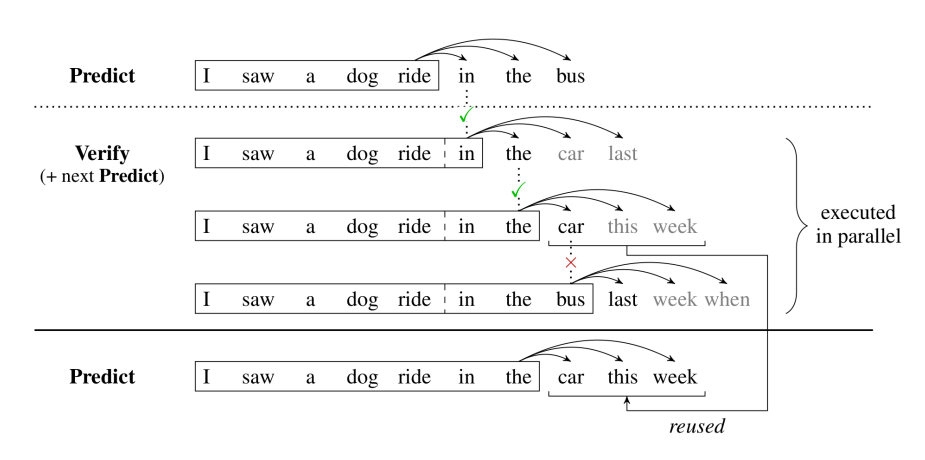
A systematic survey of techniques for reducing inference latency in LLMs, covering speculative decoding, early exit mechanisms, and non-autoregressive generation. We analyze each method's underlying principles, trade-offs, and failure modes, with the goal of understanding how recent work addresses the fundamental bottleneck of autoregressive decoding.
Master's Thesis
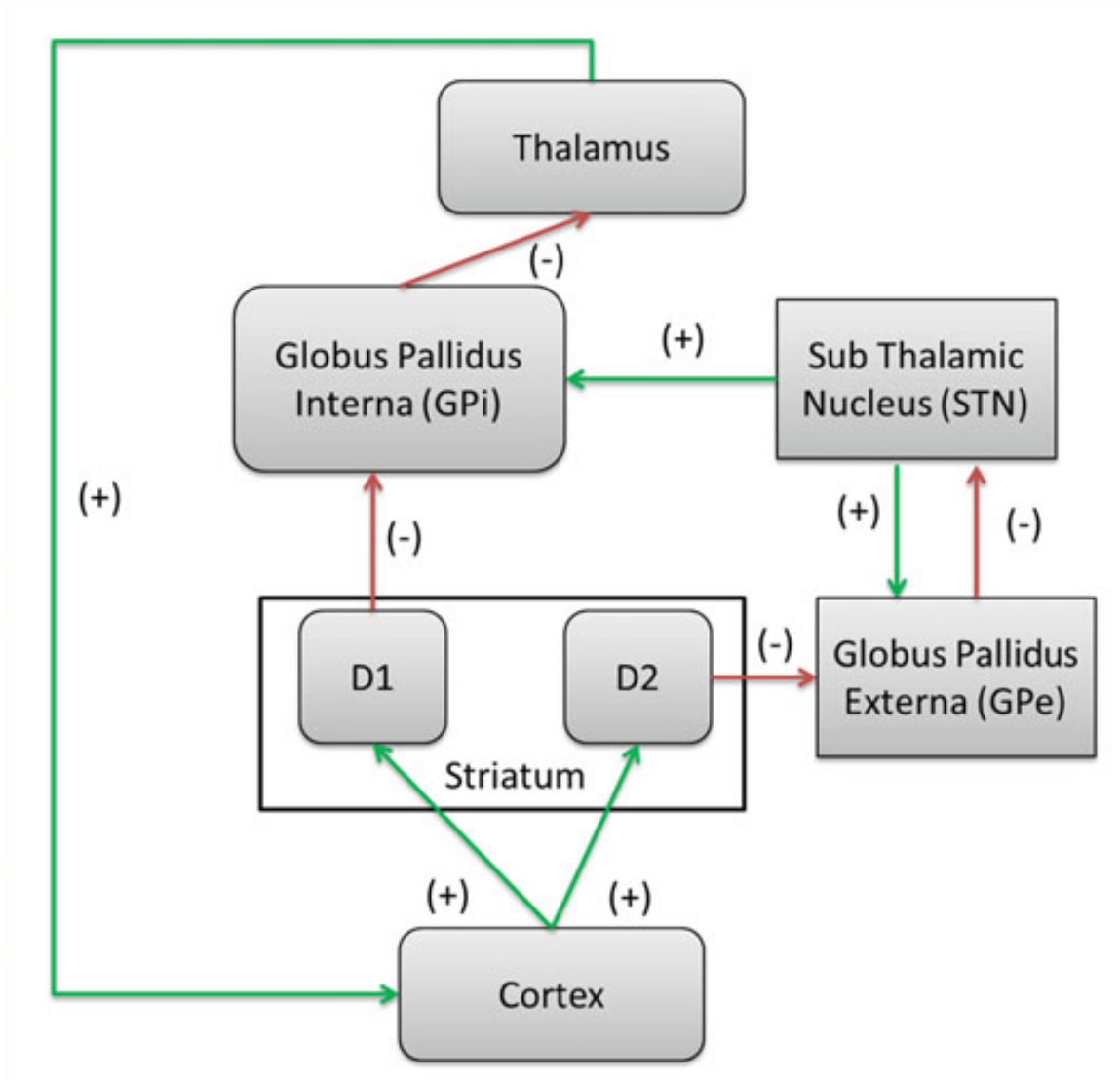
Computational Models of the Basal Ganglia: Circuits, Dopamine, and Action Selection
Developed a novel computational model of the Basal Ganglia for action selection and motor sequence learning, grounded in physiological and anatomical findings. The direct cortico-basal ganglia pathway was modeled as a neuro-fuzzy network trained via reinforcement learning with reward prediction error, mirroring dopaminergic modulation. For the indirect pathway (Subthalamic Nucleus and External Globus Pallidus loop), a recurrent neural network was proposed with a novel neuron-level learning rule derived from gradient descent, enabling the network to function as local working memory for automatic sequence reproduction.
Industry and Applied Work
LLM-Powered Financial Forecasting
Industry
Designed and deployed an end-to-end forecasting pipeline that combined a fine-tuned domain-specific LLM with real-time sentiment signals from financial news and social media. Transformer and LSTM architectures were trained jointly on equity time-series data, with a distributed Spark pipeline handling feature extraction at scale. The system consistently outperformed rule-based baselines in volatile market conditions, demonstrating that language model representations carry genuine predictive signal beyond price history alone.
Real-Time Fraud Detection at Production Scale
Industry
Built a real-time anomaly detection system for a large-scale banking ecosystem, processing millions of transactions daily. The system used instance-based learning with peer-group risk scoring and behavioral feature engineering to flag unusual activity without relying on labeled fraud data. Deployed on Apache Spark Streaming and Kafka, the system reduced false positive rates significantly while maintaining sub-second latency across distributed infrastructure.
Graph-Based Threat Detection with Complex Event Processing
Industry
Architected a graph-based Complex Event Processing engine over Apache Flink that aggregated over 40 heterogeneous network log sources in near real time. Bayesian Networks and Hidden Markov Models formed the core inference layer, enabling detection of multi-stage attack patterns that single-event rules would miss entirely. Deployed across banking and insurance clients, the engine provided a unified threat visibility layer that previously required manual correlation by security analysts.
Customer Segmentation with Hierarchical Gaussian Mixture Models
Industry
Developed a hierarchical clustering framework based on Gaussian Mixture Models, implemented in Scala on Apache Spark, to segment commercial banking customers at scale. By modeling the full distribution of behavioral patterns rather than assigning hard cluster boundaries, the system uncovered fine-grained customer segments that flat clustering methods collapsed into noise. The resulting segmentation directly informed personalized product strategies, increasing targeting precision for the bank's retail offerings.